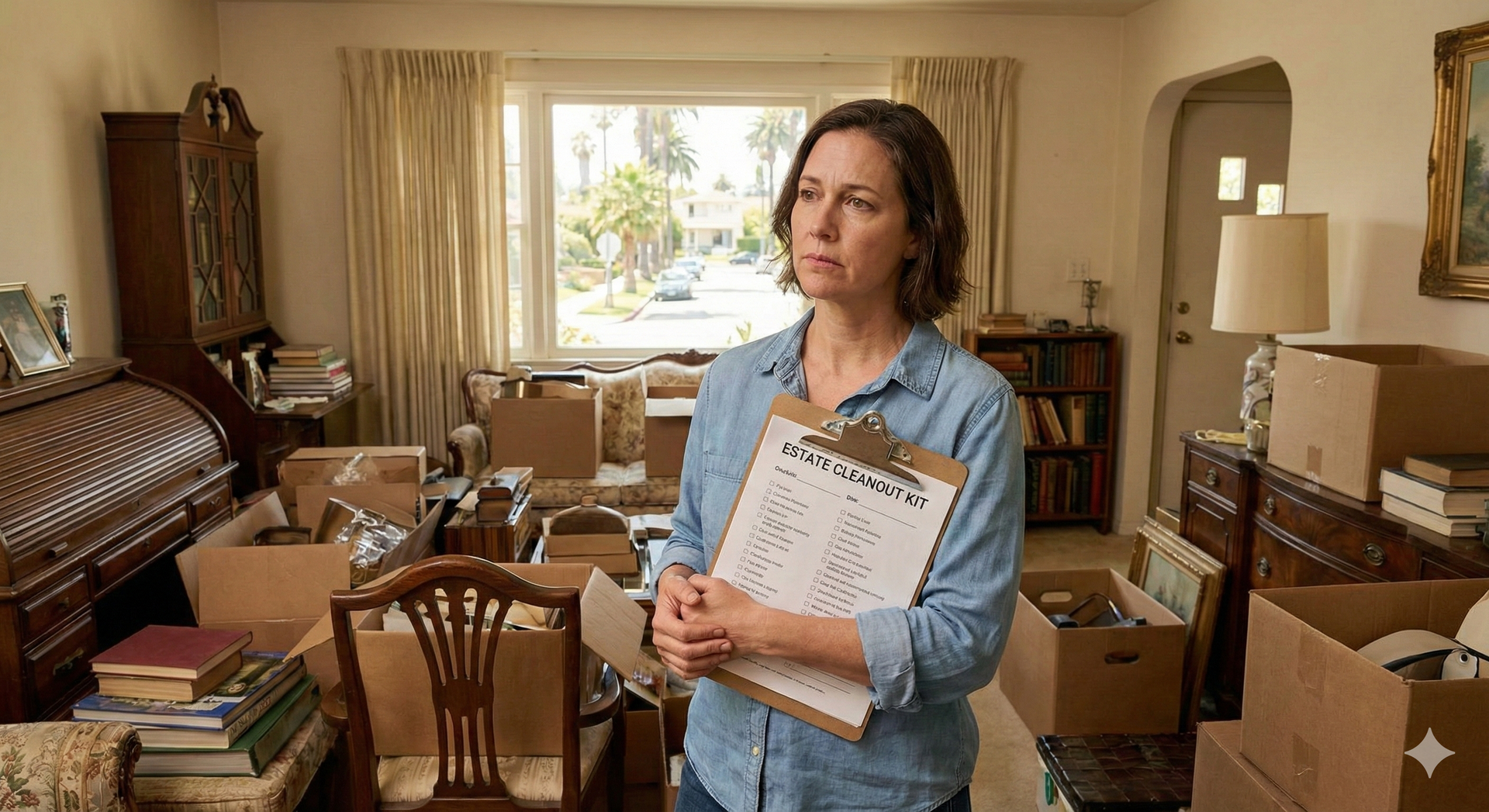
What Is Probate? A Simple Guide for Los Angeles Families

francogmartinez • November 24, 2025

Navigating an Inherited Home

inherited home

When a loved one passes away, handling their estate can feel overwhelming—especially when real estate is involved. If you’re a homeowner, heir, or Personal Representative in Los Angeles County, understanding what probate is and how it affects property is the first step toward making confident, informed decisions.

This guide breaks down the probate process in clear, simple terms—so you know what to expect and how to move forward without added stress.

What Is Probate? (Los Angeles County Definition)

Probate is a court-supervised legal process that ensures a deceased person’s assets—including real estate—are distributed correctly, debts are paid, and all estate matters are handled legally.

In Los Angeles County, probate is handled through the Los Angeles County Superior Court – Probate Division, located in downtown LA (with multiple district branches depending on the case).

Probate Is Required When:

  • The deceased owned real estate in their name only
  • There is no will, or
  • There is a will, but the court must validate it
  • Assets exceed California’s small estate limit
  • Multiple heirs must be legally determined

If you’re reading this, you’re likely just beginning this process—and that’s completely normal. Most people have never gone through probate before.

Why Probate Matters for Los Angeles County Real Estate

Real estate is often the largest asset in an estate, especially in high-value areas like Los Angeles County. Homes in:

  • Torrance
  • Long Beach
  • Inglewood
  • Downey
  • San Pedro
  • Palos Verdes
  • Gardena
  • Compton
  • Norwalk
  • Whittier

…often require probate simply because the property value exceeds California’s probate thresholds.

Probate ensures that:
✔ The home’s title is legally transferred
✔ The heirs are properly identified
✔ The executor has authority to sell or manage the home
✔ The estate avoids legal issues later
✔ All distributions follow California law

Who Handles the Probate Process?

Depending on the situation:

If there IS a will:

The court appoints the executor named in the will.

If there is NO will (intestate):

The court appoints an administrator, often a spouse, child, or close family member.

Both roles are legally referred to as the Personal Representative, and they are responsible for:

  • Managing the estate
  • Protecting the home
  • Paying bills and taxes
  • Communicating with the court
  • Selling the home (if required)

What Happens to the House During Probate?

In Los Angeles County, the court requires the Personal Representative to:

  • Secure the property
  • Keep it maintained
  • Get it appraised
  • Obtain court authority (full or limited)
  • Decide whether to sell it, keep it, or transfer it to heirs

Most families choose to sell the home because:

  • Multiple heirs need to split proceeds
  • The home needs repairs
  • No one lives nearby
  • Carrying costs are high (mortgage, taxes, insurance, utilities)

How Long Does Probate Take in Los Angeles County?

Timelines vary, but typically:

8–12 months
Average probate timeline in LA County
3–4 months
Fastest cases with full authority
12–18+ months
If there are disputes, property issues, or no will

Homes in probate can be sold during the process—often much earlier than families expect.

Do You Need an Attorney for Probate?

In California, probate is complex, and most families choose to work with a probate attorney. An attorney can guide you through legal filings—but they do not manage the house, repairs, timelines, buyers, or real estate decisions.

That’s where a Probate Real Estate Specialist becomes invaluable.

💼 How I Help Los Angeles Families Navigate Probate With Less Stress

As a Probate Real Estate Specialist in Los Angeles County, I help Personal Representatives with every step of the property process:

✔ Full-Service Property Management During Probate

  • Clean-outs
  • Repairs & contractor coordination
  • Lock rekeying
  • Landscaping
  • Securing and maintaining the home

✔ Sell As-Is for Cash (Fastest Option)

For families needing immediate liquidity.

✔ List for Maximum Value (Highest Profit Option)

Prep, repair, or fully renovate with no upfront costs.

✔ Probate Guidance

Understand the process, timelines, and what to expect.

✔ Weekly updates, complete transparency

Because you deserve clarity during a stressful time.

📞 Ready for Help? Let’s Talk.

You don’t have to navigate probate alone—especially not in Los Angeles County, where the process can feel overwhelming.

Schedule a FREE consultation:
💬 Phone Call 310 846-1117
📲 Text 310 846-1117
💻
Zoom Video Call
🤝 In-Person in Los Angeles County

👉 Click here to schedule now
Book a Free Probate Consultation

I’m here to help you protect your loved one’s home, avoid costly mistakes, and move through probate with clarity and confidence.


📘 FREE DOWNLOAD: “How to Sell a Home in Probate in Los Angeles County”

If you’re just starting the probate journey, this guide will save you weeks of confusion.

💡 Inside the FREE PDF you’ll learn:

  • What probate is
  • How property is handled
  • The fastest way to sell a home
  • How to avoid delays
  • How to protect the estate’s equity
  • What mistakes cost families thousands

👉 Click below to download your free guide:
Download the FREE Probate Home Selling Guide

how to sell your home in probate
Download Now Call Us Book A Consultation
By duda November 10, 2021
A little elbow grease; a big difference! By: Leanne Potts Beautiful you-can-do-it inspirations for easy DIY projects. As anybody who’s been inspired by HGTV can tell you, DIY home projects on TV look amaaaazing. But DIY renovations in real life: kiiiinda the toughest thing ever. And, yet, these rookie craftsmen did beautiful, jaw-dropping work that will totally inspire you. Check out these easy DIY projects for your home: #1 Pinterest-Worthy DIY Window Seat An empty recess in a room is a ripe spot for a DIY project, as home improvement blogger Britt Kingery can tell you. She and her husband, Justin, built a window seat so ridiculously Pinterest-worthy you’ll want to make one for yourself (like, right now). It’s a roomy 10-foot beauty, so you can seat a houseful of guests without dragging chairs all over the place. And (bonus!) there’s storage underneath for stashing lots of stuff out of sight. You can custom-create your own for about $250 if you’ve got a few essential DIY tools. Or you can do an Ikea hack to get the same result. Just attach one of their long, horizontal storage systems to your walls. Then add cushions and preformed molding for the same custom look. The big reveal doesn’t happen overnight, and a renovation almost always looks worse before it looks better. Britt Kingery, home improvement blogger #2 Miracle Makeover With Just Paint, Stain (and Patience) “The Brady Bunch”-orange wall and abused floors in the before photo are homely enough to strike you blind. But what a miracle paint, sanding, and stain can do! Lighter shades on the walls, trim, and floor reflect natural light, making the space so much brighter. And for very little money (about $150). The key to such an amazing transformation, Kingery says, is to be a tortoise, not a hare. Sanding, taping, patching holes, and waiting on stain, paint or polyurethane to dry takes care and patience if you want professional-looking results. “The big reveal doesn’t happen overnight, and a renovation almost always looks worse before it looks better.” #3 Instant Open Floor Plan Cramped, dark kitchens are so very 1981. Sarah Lemp of the “All Things With Purpose” blog turned her dated kitchen into an open, light-filled space that feels and functions like a larger room. The cost? $300. Yep. For less than the cost of a set of countertop canisters at Williams Sonoma, Lemp worked magic. The biggest fix? She just removed a set of overhead cabinets that blocked light and the view into the dining area, making an instant open floor plan. Then she turned to paint, the budget remodeler’s friend. She used a soft griege (designer-speak for grayish beige) for the walls of the kitchen and dining area. She painted the remaining upper cabinets white, and the bottom ones dark gray. “I love the look of white cabinets, but figured a darker color was more kid-friendly,” she says. Lemp skipped the requisite subway tile backsplash and went with peel-and-stick shiplap instead. “It was easier and cheaper,” she says. #4 Brighter Bedroom With Paint and Wood This may be an ugly room, but we’re not sure because it’s so dark all we can see are cheap blinds and a poofy valance that hasn’t been fashionable since the Olsen twins were toddlers. It needed major help. Ashley Rose and Jared Smith of the blog “Sugar and Cloth” pulled off a weekend makeover by painting the walls a lighter color and replacing the window treatments with wispy, white drapes that practically pull sunlight into the room. A pair of wall-mounted reading lamps added a second layer of light, because a lonely overhead fixture can’t light the whole room all by itself. And that wall behind the bed? It’s strips of reclaimed wood with an adhesive backing. Peel, stick, and you’re done. No nails. No glue. And just one tool: a level to make sure you stick the wood strips in a straight line. Awesome. #5 An Easy-Peasy Backyard Patio Dirt’s ugly. It’s also a pain, turning into mud when it rains, dust when it doesn’t, and sneaking into your house on the feet of dogs and kids. Covering it with a paver patio is a great fix. Chelsea Foy of the blog “Lovely Indeed” built this one in a neglected flower bed in just 10 hours. She used patio stones molded to look like several individual bricks, because leveling one large stone is tons easier than leveling a bunch of bricks. Those arcs of large river rocks just off the patio make a natural-looking transition between the factory-perfect pavers and the rest of the yard. They’ll also give you less lawn to mow or flowers to tend. #6 Fancy Wall Molding for a Bargain Price Wall molding makes a room look so custom, so finished, so much better than boring old drywall. But it costs around $25 a square foot just for the materials. Mysha Barton of the blog “Remington Avenue” pulled it off along her stairs for just $30 — total. The secret? She used MDF (medium density fiberboard, aka fake wood) to keep it cheap, and didn’t mount it in the traditional way with board panels on the wall. Instead, she put thinner “chair rail molding” directly on the wall, and painted everything white, including the wall to get that rich look of molding. The toughest part was cutting all those angles, Barton says. She got it done with a miter box and a handsaw. “My advice is to use scrap wood to practice your angled cuts before taking on your expensive molding pieces.” Barton did this project in just eight hours with three small children in the house, so even if 10th-grade geometry made you cry, you can do this. #7 A Space-Saving Workbench A DIY workbench is a gateway project, one that can lead you to harder projects and possibly, a home improvement addiction. Make this workbench your very first project and you’ll have room to do scads of projects — money-saving ones. It’ll fit in a small space because it’s actually a door mounted on door hinges, so you can fold it flat against the wall when you’re not using it. Be sure to buy a solid wood door, not a hollow one, so it’s sturdy enough to stand up to years of projects.
By duda November 10, 2021
Always feel confident it's your dream home. By: Lynn Ettinger You can make a successful offer on a home even in a competitive market — with the right information and help. When you’re house hunting, the pressure of competition can move you from “Hmm, I like that, but it’s too pricey,” to “I have to have that!” You think, so what if paying for this house will put me way over budget? I can cut back somewhere else, right? But that kind of thinking can get you into trouble. Trouble that’s totally avoidable. Whether you’re in the middle of a home bidding war or facing down a list of must-haves, don’t lose sight of your budget and the risks. That way, you can own a house without home buyer’s remorse. And you’ll have money left to enjoy things like new furniture, entertainment, and just plain having fun. Who Has Home Buyer’s Remorse and Why? A competitive real estate market can set buyers up to purchase a home that’s either beyond their budgets —sometimes hugely beyond — or doesn’t meet their needs, according to a 2021 survey by Bankrate and YouGov. The survey found that recent home buyers, including 64% of millennials, had regrets about their home purchase. The top reason? They were unprepared for maintenance and other home ownership-related costs. On top of that, 13% percent of millennials said they think they paid a higher sales price than they should have. “Things in homes always break down, so people should put aside a budget for anything that will need fixing,” says Lawrence Yun, chief economist at the National Association of REALTORS®. “A rule of thumb is to anticipate 1% or 2% of the home price for potential maintenance,” he explains. “So, for a $300,000 home, that means setting aside $3,000.” One reason home buyers may be tempted to go over budget is they’ve been influenced by the beautiful homes on TV, according to an NAR report on home staging. “The shows can create unrealistic expectations for the home buying process and how homes should look,” says Brandi Snowden, NAR director of member and consumer survey research. In time, buyers can view features that used to be luxuries as necessities. They believe everyone has them and they should too. One solution: Work with a REALTOR as early as possible in the process. “Make sure your agent knows your budget, so they can help you set expectations and stick to them,” she advises. How to Navigate House Hunting in a Competitive Market In addition to pressure to exceed their budgets, buyers are facing hurdles like these five: 1. Requests to Waive Contingencies Tamara Suminski, a real estate agent at Beach Real Estate Group in Manhattan Beach, Calif., is seeing not only bidding wars but also sellers wanting buyers to waive contingencies. “With an appraisal contingency, if the appraisal comes in low, the buyer has choices. They can choose to try to renegotiate with the seller, bring in the difference, or cancel. When they remove that contingency and its protection, and if the home doesn’t appraise at the right level, the seller is not very likely to renegotiate with them. And the buyer has waived their right to cancel. If they cancel anyway, they’re risking their deposit.” Some buyers are also waiving contingencies related to home inspections. These investigations are an opportunity to have a home inspector view the home based on disclosures and for the buyer to use findings as a bargaining tool, Suminski says. Eliminating these protections can end up costing money for buyers. And the more offers the buyer writes and loses, the more risk they will tolerate. So, they may waive contingencies and regret it later, says Suminski. Talk to a buyer’s agent who will guide you through this and explain the risks of removing protections and unknown variables, she advises. 2. Speed Showings and Decisions Bryan Yap recently bought a home in an expensive and highly competitive market — Orange County, Calif. He found that with the pandemic, each showing lasted only 15 minutes. That was one of the biggest hurdles. “We’d see three, four, or five homes in one day. It’s hard to keep track of what you like and don’t like with each house. What I would do differently is take notes immediately after viewing a home. If you’re able to prepare beforehand, create a list of wants and requirements in priority order. Immediately after seeing each home, rank it based on the list.” 3. Focusing on the Top of Your Price Range “If you’re looking in a micromarket where listings are achieving multiple offers and homes are going above asking price, don’t set your on the houses at the top of your price range,” Suminski says. If $300,000 is your upper limit, look at houses priced at $250,000 or $275,000. Otherwise, you’re going to be outbid from the gate every time.” That was the process Yap used when he was looking. “I would look for homes $25,000 under my max budget. I went on Zillow and looked at homes that were sold recently and tried to calculate the average over-listing price those homes were being sold for and factor that into my offer price.” 4. The Need to Compromise Yap’s must-haves were three bedrooms, two baths, and being closer to the city center of Anaheim. “I was able to get three beds, two baths, but I did have to compromise on location. I also had to compromise on price, which was doable because I could still afford it. To compete with all the potential buyers, I knew that we had to either offer an over-list price or remove some contingencies.” Suminski advises adjusting your search outward geographically, even if it means a longer commute. Buyers might also have to compromise on property types and features. In addition, they should consider doing some DIY projects instead of wanting everything to be move-in ready. “They may have to be willing to look at townhouses instead of single-family homes or install carpet and paint on weekends.” 5. Information Overload In the two years before he started searching for a home, Yap did a lot of reading. “It was a massive plan I had to come up with and stick to so that I’d be able to afford buying a home.” Because of how hot the Orange County market is, agents scheduled showings as soon as a house was listed or showed “coming soon” status. Yap treated the home search as “almost a second job,” using lunch breaks and evenings to check emails, do online searches, and text his real estate agent about what he wanted to see. “I had to make a lot of sacrifices. People wanted to set plans with me for the weekend, but I said, ‘Sorry, I have to go view homes that day.’” He primarily credits his real estate agents, including Sumiski, for keeping him informed. “They made all this possible. I learned a lot from them.” Some agents, like Suminski, hold an accredited buyer’s representative designation but usually work with sellers as well as buyers. “An [agent with an] ABR has taken extensive buyer’s representation training,” Suminski says. “They’ll provide education to buyers so that they’re learning as much as they can about the market, including the risks involved with different negotiations. If buyers are going to shorten terms or remove protections, they need to be well informed about the pitfalls.” Learn from Experiences That access to information and guidance will help buyers making an offer on a home especially in a competitive market. “Today’s buyer has seen and written offers on many properties before they get their offer accepted,” Suminski says. “That’s common across the country. Each is a learning opportunity for buyers about what information they might need to be researching so they can move more quickly.” When you act on advice from recent buyers and agents, you can stay well informed and get good results even in a tough market. And that’s the best way to prevent home buyer’s remorse.
More Posts